

Alzheimer’s-Dealing with Pain

As Alzheimer’s disease (AD) or other related dementia worsens, seniors are more likely to feel pain. Most people with moderate to severe dementia feel pain every day. Many don’t get proper treatment because their pain isn’t noticed by family and caregivers.
People with AD often have a blank facial expression, which hides normal signs of pain like frowning or a tense mouth. Many also lose the ability to say “this hurts” or “I’m in pain.”
Screaming, hitting, or being withdrawn are often mistaken for dementia symptoms, but they may actually be signs of untreated pain. Pain can also cause poor sleep. Even if a person seems to sleep more, the sleep is usually light and not restful.
When pain is properly treated, people with dementia may become more awake, social, and calm, even if the medicine can make them a little sleepy.
It can be difficult to figure out whether someone with dementia is in pain, and what is causing the pain. People with dementia may not be able to tell you in words that they are in pain, or even where the pain is. Sometimes they can be in great pain and not be able to communicate directly. Watch for common causes of pain. Look, touch, listen and think about the different types of pain your loved one may be experiencing. Inspect his or her mouth for oral sores due to decay or ill-fitting dentures. Inspect feet for skin lesions or issues from ingrown toenails. Do you see your loved one wince or guard against gentle pressing on the abdomen? Feel large joints, like knees and hands. Do they feel warm or is one swollen? Does she appear more comfortable in certain positions?
In the early stage of dementia, he or she may answer in what seems like a response to the question the doctor is asking—even though they do not understand the question—but are simply trying to be helpful.
For example, wherever the doctor touches and asks, “Does it hurt here?” They may keep saying, “Yes.” This does not help the doctor to figure out where the pain is.
You know the person in your care better than the doctor, so you will be able to interpret her way of communicating. Here are some signs of pain that will be of help when the senior is unable to tell you directly—
- verbal cues—crying or moaning, calling out
- rubbing or protecting one part of the body
- facial expression, frowning, or grimacing
- decreased activity level, tired or withdrawn
- trouble sleeping
- a stiffened upper or lower body that is held rigidly and moved slowly
- increased agitation, aggressive behavior, pacing or rocking, swearing or yelling
- mental status changes, increased confusion or irritability
Each person has his or her own pain signature. You, as caregiver, will know what behavior is typical. You can recognize that there is a change in behavior and perhaps when that change indicates pain.
Source: Caregiving in the Comfort of Home for Alzheimer’s Disease; Mayo Clinic
What to Do in an Emergency

In the course of caring for a person with AD it is likely that an accident will occur or that the person will appear to be seriously ill. A person with dementia can fall and break a bone and not complain of pain. On the other hand, a relatively minor illness or discomfort may make the person extremely upset. Because of his dementia, the person may not be able to help you to decide what kind of care is needed. If it is an emergency, call 911. You should not try to take the person to the emergency room on your own. Inform staff members that he has Alzheimer’s. The following signs always indicate an emergency that needs immediate attention—
- loss of consciousness or a marked change in mental state
- sudden severe chest pain or difficulty breathing
- a fall that results in severe pain or inability to move
- an accident that results in a blow to the head
- uncontrollable bleeding
- high fever accompanied by confusion and delusions
- repeated or forceful vomiting
- failure to urinate for more than twelve hours
- sudden slurring of speech, loss of vision or balance, extreme weakness
- violent or uncontrollable behavior
- swallowing a poisonous substance
Memory Care
At a hospital or a doctor’s visit, make sure the person in your care wears needed eyeglasses, dentures, hearing aids or other assisted devices. Bring comfort items, such as her favorite blanket, to appointments.
Taking Care of Yourself- Simple Comforts
When a person with dementia is in pain, it can be very stressful for caregivers. Reducing pain can help both the patient and the caregiver.
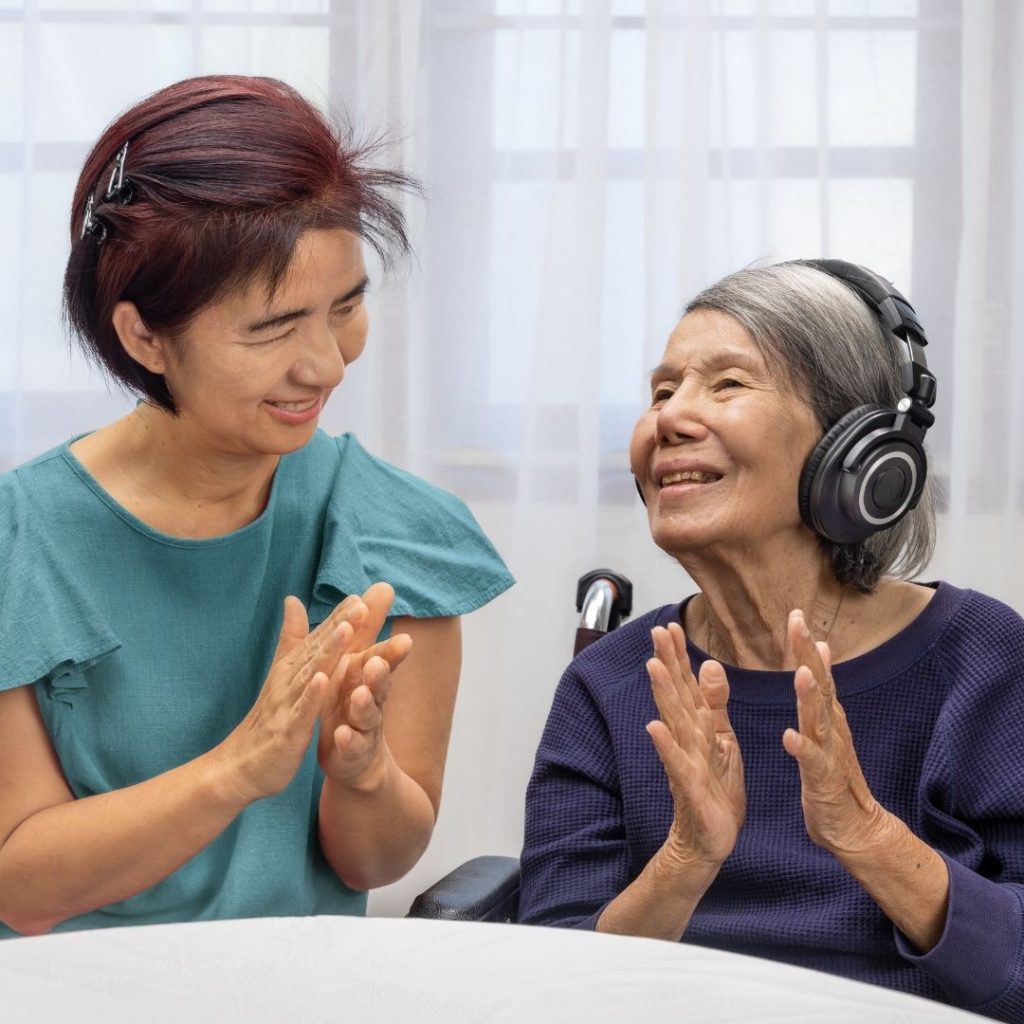
Music therapy is a gentle and effective way to help ease pain. Just playing songs your loved one enjoyed in their younger years can help. Music can—
- Distract from pain
- Boost mood by releasing feel-good chemicals (endorphins)
- Bring back happy memories
- Help them feel more connected and calm
Other simple ways to bring comfort include aromatherapy such as enjoying pleasant scents like lavender or vanilla. Friendly dogs or cats can lift spirits, as can drawing or coloring together. These activities don’t need special training and can be done at home, often bringing peace to both the patient and the family.
Safety Tips- Dehydration
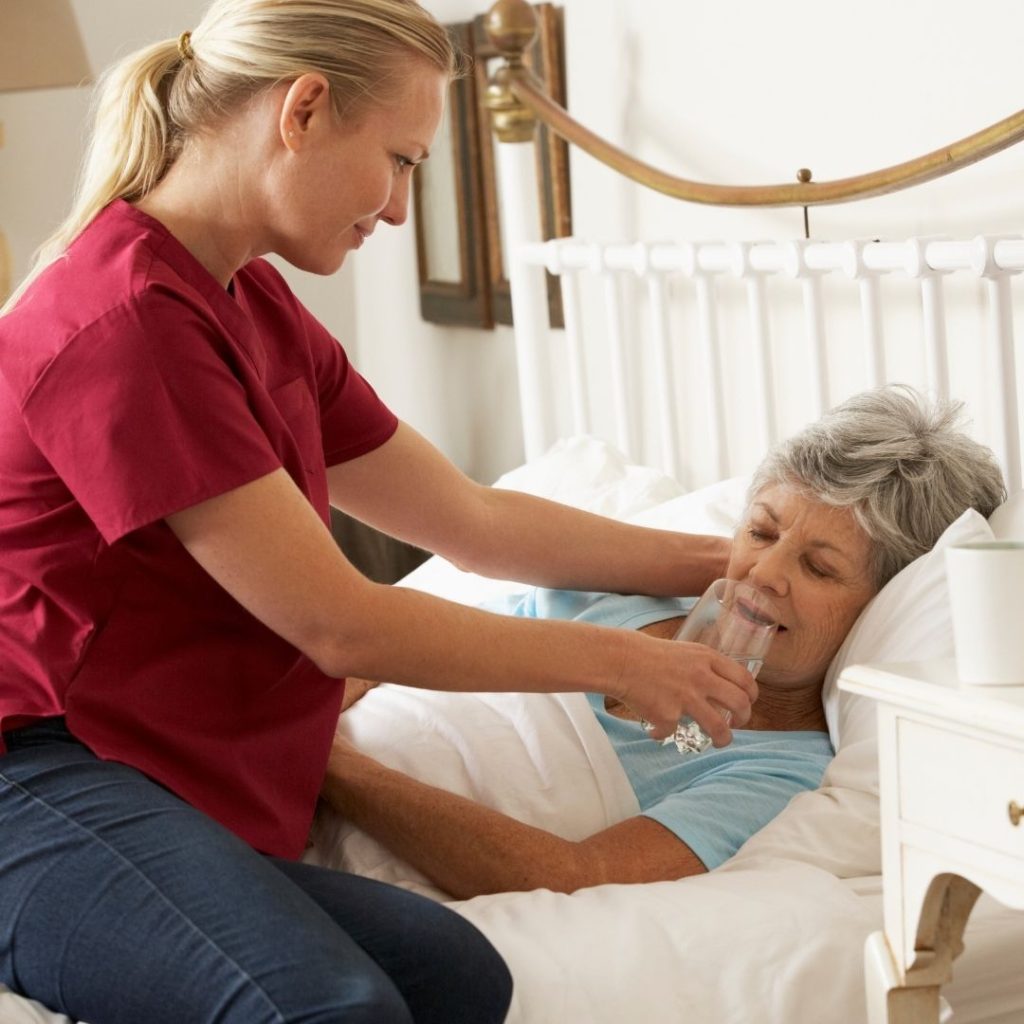
A major cause of emergency room visits for frail or demented older adults is dehydration.
Dehydration occurs when a person is either not getting enough liquids daily or excreting too much urine. The body’s ability to detect thirst diminishes with age. Illness and medication can also cause:
- Headache—the most common symptom
- Dry mouth and tongue; cracked lips
- Dry skin
- Sunken eyes
- Nausea, vomiting, diarrhea
- Dark, strong smelling urine
- Weight loss
- Fast heart beat; low blood pressure
- Confusion, light-headedness
- Disorientation