
Appalachian Regional Commission

The Appalachian Regional Commission (ARC) is a federal-state partnership that works with Appalachian communities to create opportunities for self-sustaining economic development and improved quality of life. Local Development Districts, like Buckeye Hills Regional Council, work in partnership with the ARC to promote regional strategies for partnerships, progress, and prosperity.

 

About

The Appalachian Regional Commission provides funding for projects related to entrepreneurial and business development, workforce development, critical infrastructure, natural and cultural assets, and leadership and community capacity. 

Established in 1965, the ARC is led by a Commission composed of the Governors from each of the Region’s 13 states, and a Federal Co-Chair who is appointed by the President and confirmed by the Senate. Each year, the governors select a States’ Co-Chair to lead the Commission in partnership with the Federal Co-Chair.

Each Appalachian Governor selects an appointee to represent their states’ interests and priorities to the Commission. These representatives, referred to as State Alternates, are liaisons between the Governors and ARC Leadership. Every state also has a State Program Manager who is the state-level contact for ARC and facilitates ARC investments with ARC staff. Alternates and State Program Managers work closely with local organizations, including Local Development Districts, to guide ARC investment decisions and policy decisions. ARC staff review proposals, manage investments, and conduct research in cooperation with the states.

To maximize investments made by the ARC in Ohio, the Governor’s Office of Appalachia (GOA) was formed in 1986 to enhance those opportunities with matching state funds for projects. Ohio is the only state in the ARC region to match the federal allocation with state funds. To learn more about the GOA, visit their website by clicking here.

ARC approves funding for more than 400 projects annually throughout the 13-state Appalachian Region.

ARC 2022-2026 Strategic Plan

Eligibility

Eligible Applicants: political subdivisions, educational institutions, public institutions, and non-profit organizations.  

Eligible Projects: ARC supports sustainable community and economic development in Appalachia. Its 2022-2026 Strategic Plan, “Appalachia Envisioned,” outlines five goal areas that guide ARC’s funding decisions. To be eligible for funding, projects must align with at least one of these five goals. The goals are listed below and are not ranked in order of priority:

Building Appalachian Businesses: Strengthen and diversify the Region’s economy through inclusive economic development strategies and investments in entrepreneurship and business development.  

Building Appalachia’s Workforce Ecosystem: Expand and strengthen community systems (education, healthcare, housing, childcare, and others) that help Appalachians obtain a job, stay on the job, and advance along a financially sustaining career pathway.  

Building Appalachia’s Infrastructure: Ensure that the residents and businesses of Appalachia have access to reliable, affordable, resilient, and energy efficient utilities and infrastructure in order to successfully live and work in the Region.  

Building Regional Culture and Tourism: Strengthen Appalachia’s community and economic development potential by preserving and investing in the Region’s local, cultural heritage, and natural assets.  

Building Community Leaders and Capacity: Invest in the capacity of local leaders, organizations, and communities to address local challenges by providing technical assistance and support to access resources, engage partners, identify strategies and tactics, and conduct effective planning and project execution.  

Please see the ARC 2022-2026 Strategic Plan to assist in preparing your project proposal summary 

FY 2026* County Match Rates in association with total project cost: 

*County designations are subject to change.  

  • Distressed – 20% 
    • Meigs
  • At-Risk – 30%
    • Athens, Monroe, Morgan, Noble
  • Transitional – 50% 
    • Hocking, Perry, Washington 
  • Competitive- 70% 
    • None 

Application Timeline

To be considered for funding, applicants must submit the pre-application through SurveyMonkey Apply. Paper or email submissions will not be accepted.

Pre-applications are due by 5:00 p.m. on June 12, 2026. Applicants are strongly encouraged to submit early and to keep a complete copy of their submission in case revisions are requested.

  • April 27, 2026: Pre-Applications Open
  • June 12, 2026: Pre-Applications Close
  • June 30, 2026: Cure Period Ends (All Final Pre-Applications Due)
  • July 2026: BHRC Presents Projects to County Commissioners
  • August 7, 2026: BHRC Executive Committee Approves Project List
  • September 1, 2026: Selected Projects Open Full Applications in Salesforce/Pathways
  • September – December 2026: Full Applications Submitted to the Governor’s Office of Appalachia via Salesforce/Federal ARC via Pathways for Selected Projects
  • No earlier than Spring 2027: ARC Grant Awards Available for Expenditure

Pre-Application Required Materials

BHRC requires additional documentation as part of the pre-application. You may save your application at any time and return later to complete it. The following items are required for the pre-application:    

Employer Identification Number (EIN) and Unique Entity Identifier (UEI): All applicants must include EIN and UEI in the pre-application. An EIN (Employer Identification Number) is a nine-digit number issued by the IRS for tax purposes, while a UEI (Unique Entity Identifier) is a string of alphanumeric characters issued by SAM.gov for business transactions and credit.  

Ohio Administrative Knowledge System (OAKS) Supplier/Vendor ID Number: To do business with the State of Ohio, each grantee is required to have an OAKS Supplier/Vendor ID and provide banking information to receive payment. (If your organization currently receives payments from the State or another state agency, it is likely you already have an OAKS Supplier/Vendor ID.)  

Project Type and Funding Maximums: Projects fall into one of two categories: construction and non-construction. 

  • For projects construction projects, applicants may apply for up to $500,000.
  • For non-construction projects, applicants may apply for up to $250,000.
  • BHRC reserves the right to modify the applicant’s funding request. The modified amount must be agreed upon by the applicant and BHRC. 

Strategic Rationale: Applicants must identify the problems and/or opportunities the project will address, explain the critical circumstances that compel the project to be funded, and describe how the project supports a regional strategy or plan.  

Counties Served Documentation: For each county the project proposes to serve, applicants must upload a letter or email of support from a community partner located in that county. For example: County Commissioners, Mayors, non-profit leaders, school district administration, etc. At least one letter of support is required for the pre-application to be considered complete.  

Performance Measures: All projects must have documented performance measures. Applicants will estimate their project’s measures in the project pre-application. If selected, these measures will be used to show progress in quarterly and closeout reports. Measures may be outputs or outcomes. Outputs are the direct products of project activities and are often measured by the volume of work accomplished. Outcomes are benefits or changes for individuals, communities, organizations, businesses, or other entities during or after the project’s grant period. They are the measurable results or impact.  

For detailed information about measuring performance for your project, visit ARC’s guide to project performance measures.

Project Readiness Documentation: Please include project readiness documentation in your pre-application for construction projects. 

For projects involving job creation or retention, applicants must submit a letter from the company or companies on official letterhead, written in their own words, committing to the jobs. The jobs must be directly tied to the proposed project and must specify the number of full-time and part-time positions. Letters must also include the amount of private investment associated with the project. Form letters are not accepted by ARC or BHRC. 

Legal Requirements or Health & Safety Justification: If you are legally compelled to complete your project, please upload documentation of the directive that compels you to do so (for example, Ohio EPA Findings & Orders). If no court directives are applicable, upload the Health and Safety Justification explaining your project’s response to health and safety concerns.  

Funds Commitment Letters:  For each committed funding source, upload a signed and dated commitment letter on official letterhead that clearly states the amount pledged to the project.

  • For projects using Ohio Water Development Authority (OWDA) funding, include a letter from your Chief Financial Officer stating intent to apply.
  • If your community received principal forgiveness, upload the OWDA documentation showing the award

Resources

Assistance for Applicants

The staff at BHRC is readily available to assist applicants. For any inquiries, concerns, or guidance regarding your pre-application, please contact Emma Yeager, Development Specialist, at eyeager@buckeyehills.org.

Other ARC funding opportunities are available on the Grants and Opportunities page of their website. 

Ready to Apply?

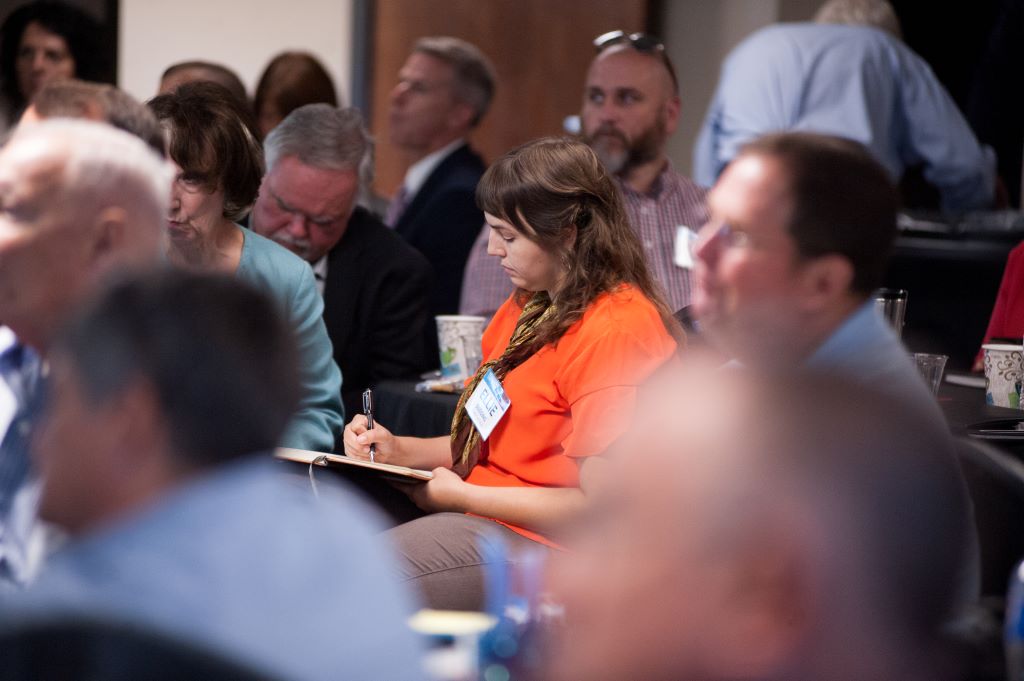
Woman attending BHRC community development seminar takes notes

Ideas & Intake

Need Help Planning a Project and Applying for Grants?

Our region has no shortage of good ideas. By completing our Ideas & Intake form, you are providing the information necessary to begin transforming your idea into a fundable project.

Advice Line

Older Adults & Caregivers

We connect older adults, individuals with disabilities, and their caregivers with relevant program and enrollment information.

Need immediate help for yourself or a loved one?

Community Leaders

We provide local community leaders with up-to-date strategic data, program information, and funding opportunities.

Need funding for a project in your community?

Are you a service provider?